Inhabiting the Rhythm of a Place
In the Douro, the territory seems, at first glance, to almost offer itself entirely, without demanding much in return. The landscape, in its sheer presence, opens up and reveals itself with an apparent clarity. But that evidence is often misleading. Or simply superficial.
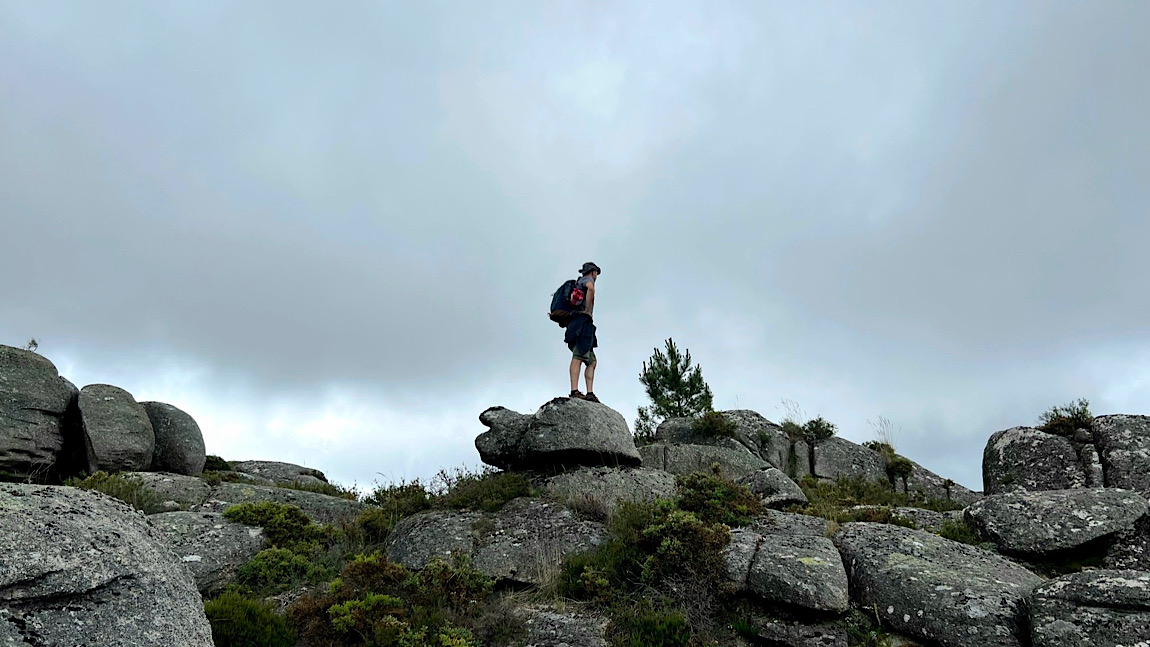
What is seen at first (the scale, the lines of the slopes, the presence of the river) tends to capture the gaze and confine the experience to a brief, hurried, almost definitive reading. To inhabit the Douro implies the opposite. It requires staying. Entering slowly. Moving through it at a measured pace. Feeling one’s way, at times without a clear direction. Going deeper, learning to see rather than simply to look.
Returning to the same place — not out of insistence, but to allow for another perception, another reading. Exploring what is subtle, what lies between the lines: that which only silence, slowness and attention allow to emerge. For this, one must accept that the landscape is not a postcard, nor a form of sensory entertainment. It does not exhaust itself in a first impression, however striking it may be. It is in returning, in passing through again, that the territory begins to gain depth.
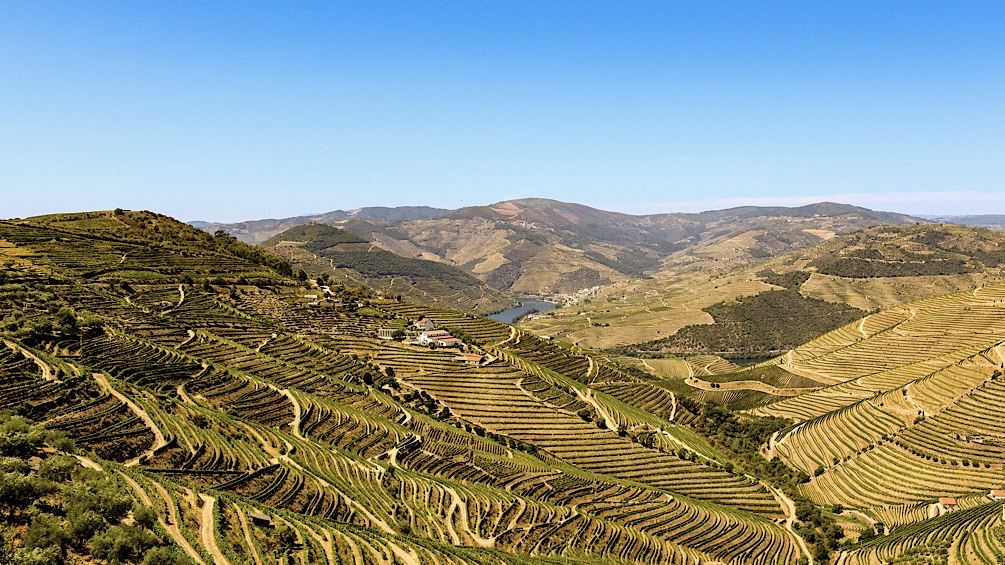
Photo by Bruno Ferreira in the Unsplash
Between Form and Permanence
The terraces draw one of the most constructed and striking landscapes in Europe. Precise, continuous lines that organise the territory with an almost absolute logic. But this clarity, when seen from a distance, can become detached.
Up close, the landscape fragments. The stone walls reveal their materiality. The slope imposes itself on the body, making visible what lies beneath: continuous, demanding work, without romanticism.
The journey ceases to be panoramic and becomes something lived through the senses. Walking in the Douro means letting go of the dominant viewpoint, the one that seeks to grasp everything at once. It is an acceptance of another rhythm: less expansive, more dense, more cyclical.
It is also a way of recognising a cultural landscape exposed to the growing unpredictability of climate. And of understanding it for what it is: a demanding, persistent human construction, far from any easy reading.
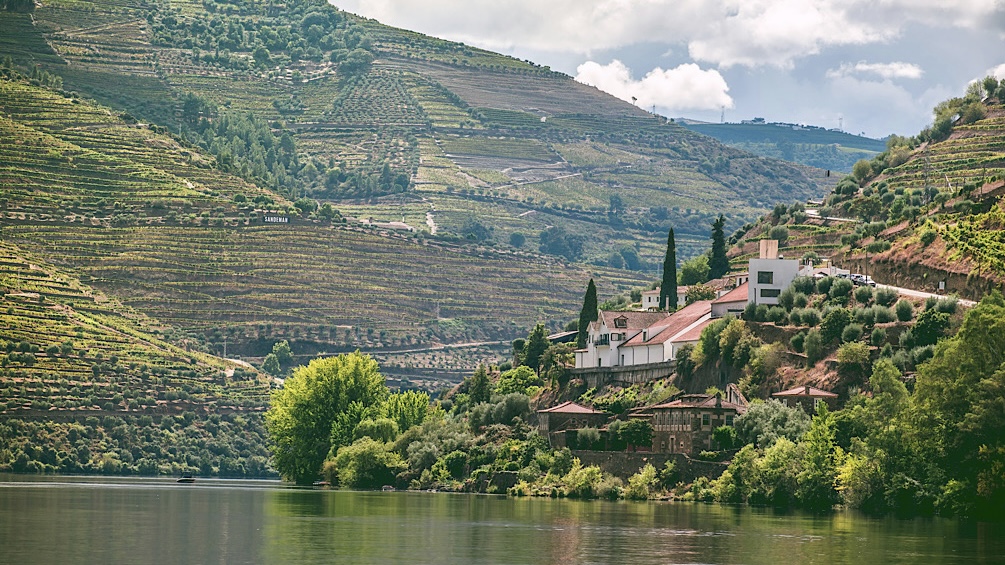
Photo by Rach Sam in the Unsplash
When Seeing Becomes Time
The Douro is, by nature, an exposed territory. Light falls directly onto it, shaping volumes, sharpening contrasts, defining each plane of the landscape with precision. This exposure favours immediate impact, a sense of wonder — but it does not guarantee depth.
It is time that transforms this initial evidence into experience. The changing light throughout the day, the shifting seasons, the return to the same paths: all of this gradually moves the gaze from surface to relationship. What at first seemed obvious becomes, over time, more complex, quieter, harder to grasp.
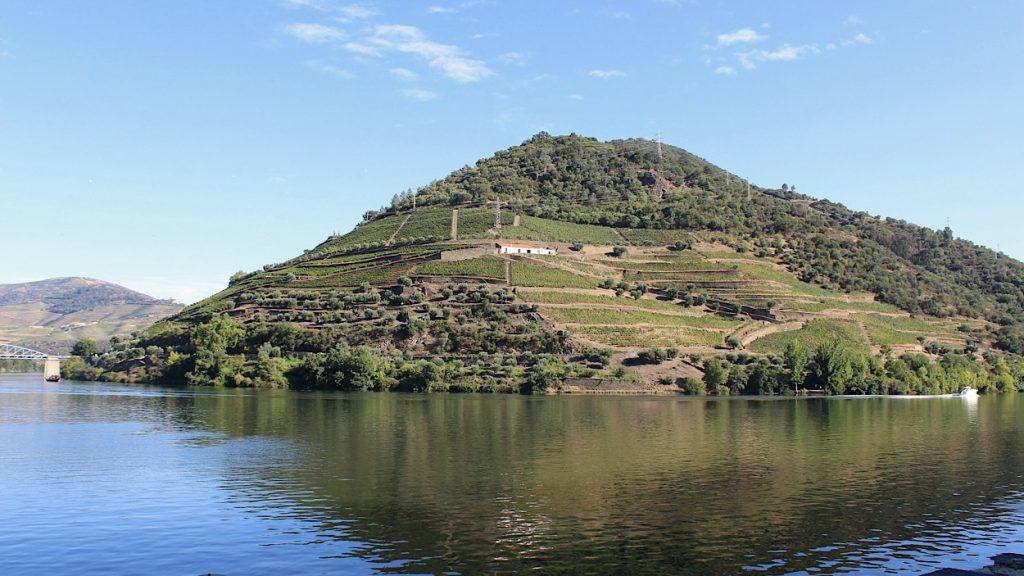
Photo by Rui Alves in the Unsplash
A Territory in Suspension
Despite its strong presence, the Douro contains a sense of suspension. Between river and slopes, between the constructed and the natural, between what is seen and what is lived. This tension never fully resolves. And perhaps it shouldn’t.
As the days unfold, the need to move lessens, the urge to seek more begins to settle. The impulse to know gives way to the desire to remain. The Douro ceases to be a setting. It becomes a space of resonance.
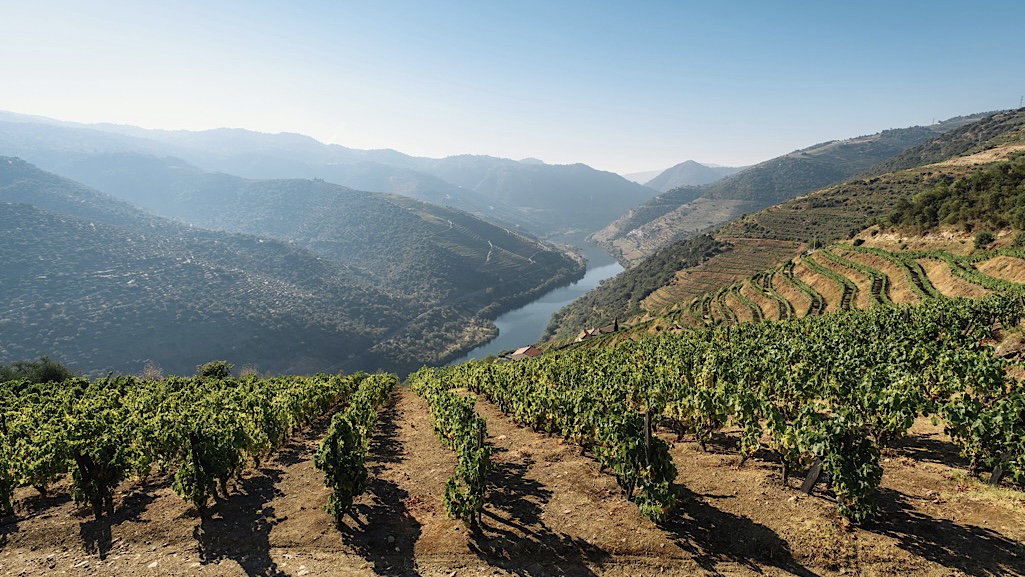
Photo by Maksym Kaharlytskyi in the Unsplash
A Place Rediscovered
In a context shaped by constant circulation and the repetition of images, the Douro risks becoming predictable, almost illustrative. But this predictability is only apparent.
When lived with time, the territory opens again, revealing its layers. Paths accumulate meanings. Places cease to be points on a map and become references.
And so, almost without announcing itself, something shifts. And it is perhaps there, in that moment — difficult to define — that the Douro reveals something of its more demanding nature: not as a landscape to observe, but as a territory to relearn. To discover again.