Engineering, memory and survival
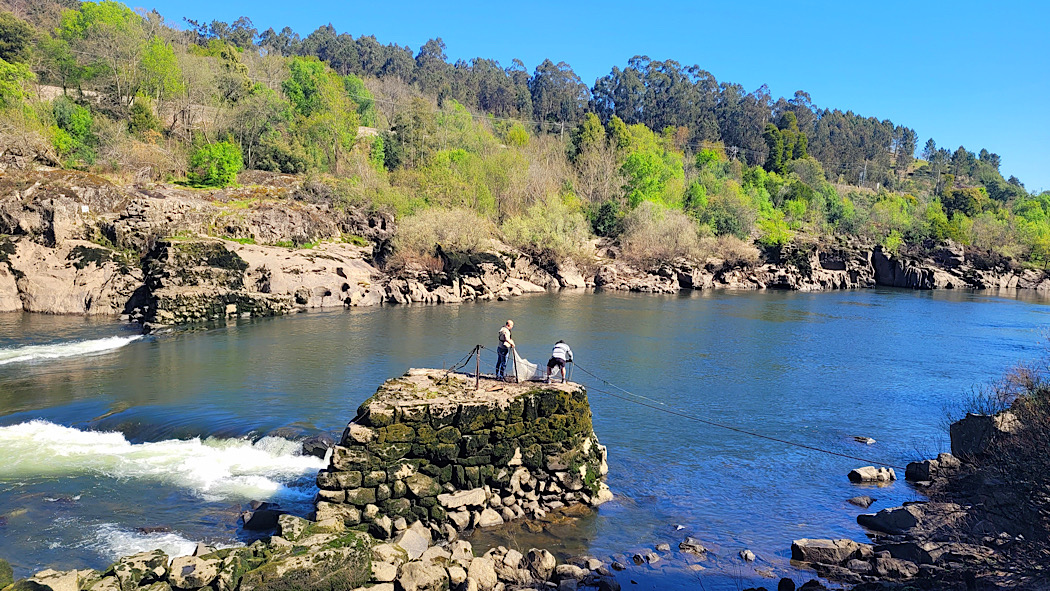
engineering, memory, and survival The pesqueiras of the Minho River form a precious heritage, valued not only for the ingenuity of their construction and their age, but also for the vital role they have played over centuries in sustaining the riverside communities. Between Monção and Melgaço, along a roughly 37-kilometre stretch where the waters run most fiercely, around 900 pesqueiras can be found, of which approximately 250 remain active. They are discreet yet powerful traces of a long-standing relationship between humans, the river, and time.
A history spanning centuries
The earliest written records of their existence date back to 1071, confirming their long permanence in the territory. Some theories suggest an even older origin, proposing that certain pesqueiras may have been built by the Romans, drawing on their advanced knowledge of hydraulic engineering.
Supporting this hypothesis is the historical importance of the lamprey — the river’s most coveted fish — which, according to ancient sources, was once transported alive to Rome in carts, stored in large clay containers.
Later, monasteries played a central role in promoting and maintaining these structures, ensuring food supply for communities, especially during Lent. Today, the pesqueiras survive primarily associated with lamprey fishing, though this species is increasingly scarce.
Community and river governance
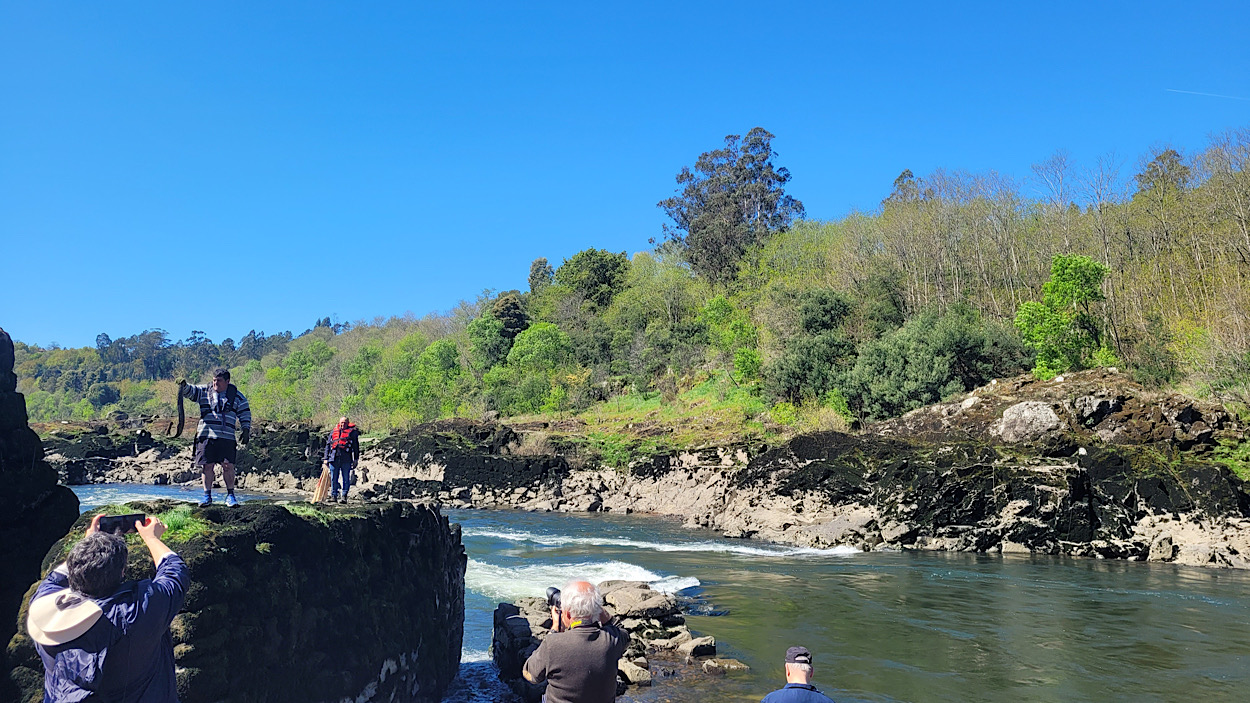
The ownership of the pesqueiras is relatively complex but functional. Most belong to multiple owners, one of whom is designated Patrão da Pesqueira.
Fishing activity is organized through a rotational system that defines each participant’s fishing days, ensuring balance, continuity, and respect for a community logic passed down through generations.
Here, the river is not merely a resource: it is a shared space, regulated by social practices as important as the technique itself.
A Living heritage
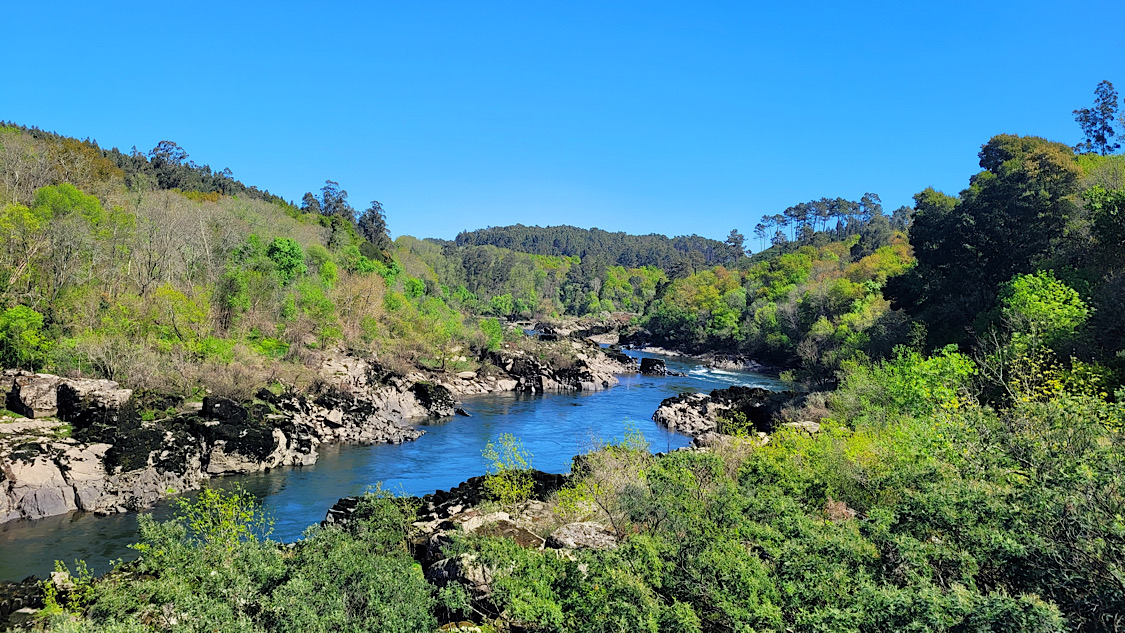
The pesqueiras offer a fascinating heritage, where ancestral engineering, traditional knowledge, and collective memory intersect.
They are not ruins, but living devices of human interaction with the territory. Preserving and valuing them means acknowledging a river culture that has endured for centuries and continues to shape the human landscape of the Minho.
Discovering them is entering a silent dialogue between water, stone, labour, and time.